GENERAL DRESS & APPEARANCE
1 / 20

Morning inspection · orientation

The Morning Inspection
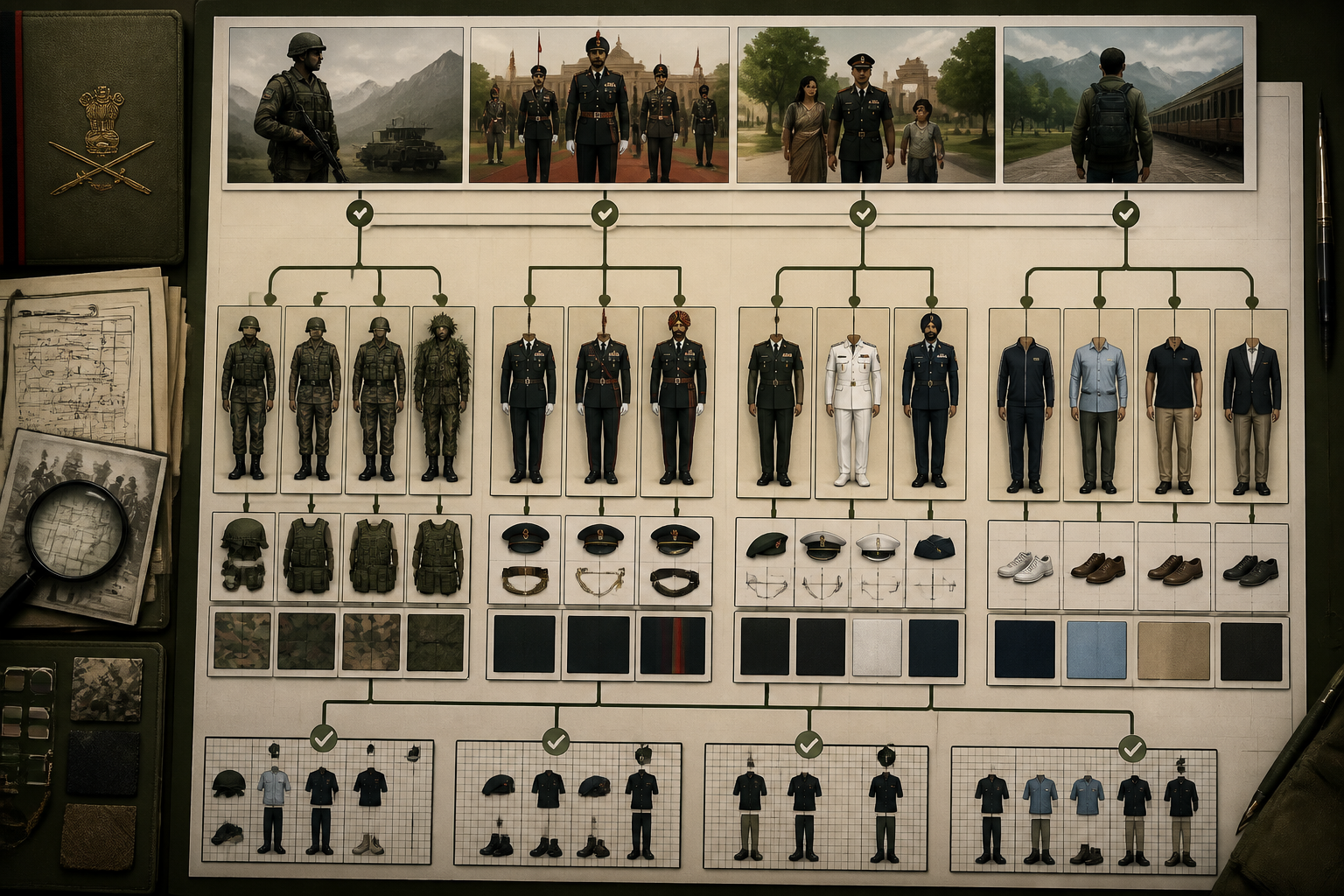
Uniform decision rules across duty and public contexts

At 06:30, an inspecting officer reviews a team preparing for duty, travel, and an evening function. Each person looks broadly presentable, but the details raise different questions: Is the uniform authorized for the activity, is the dress order correct, and are any additions personal choices rather than permitted items? Chapter 1 treats these questions as matters of discipline, professional image, and public confidence. In this lesson, classify each situation before judging the individual item.
Apply the inspection lens

Authorize before assembly

First Question: May Uniform Be Worn?

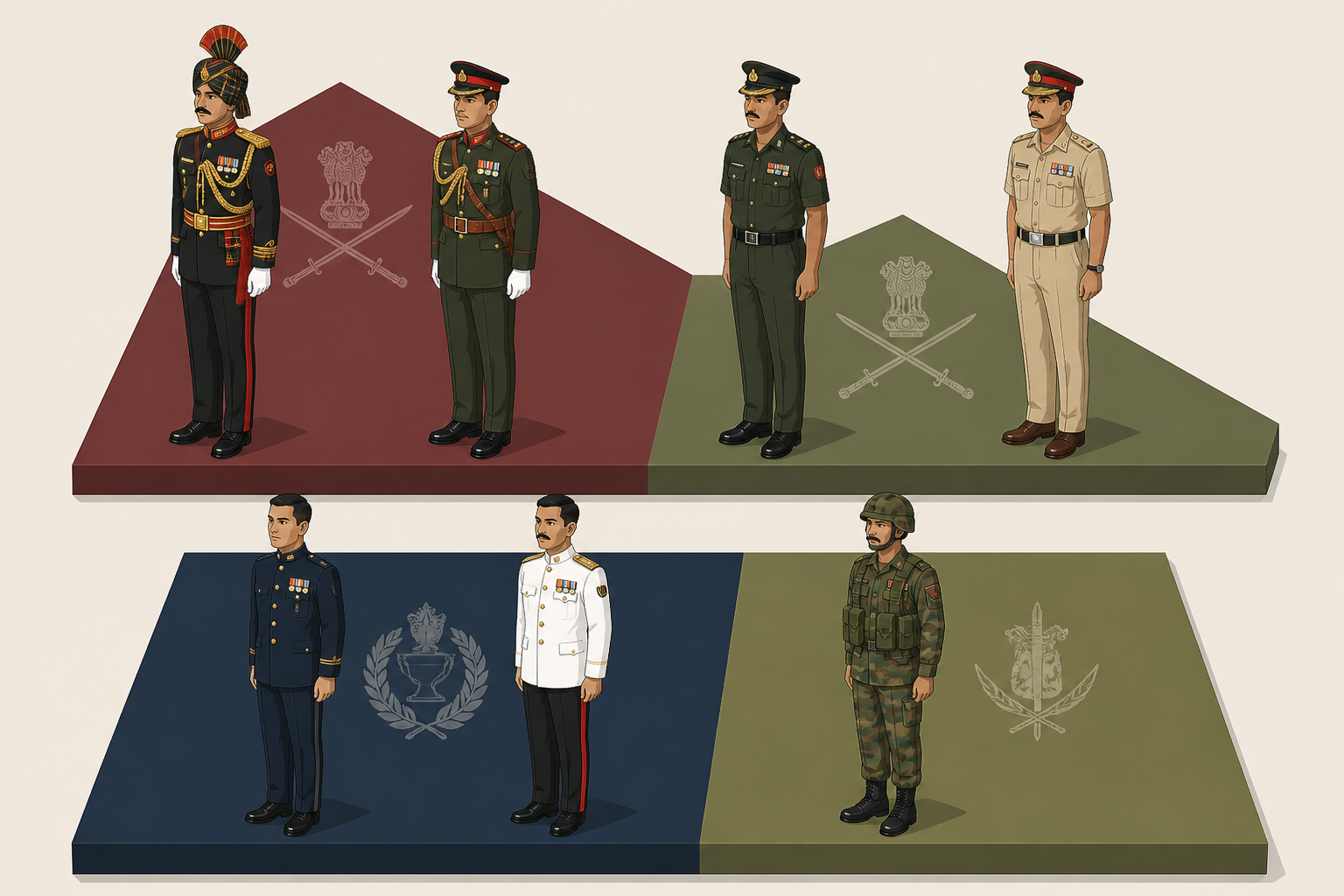
Indian Army dress categories

Uniform is worn for specified duty, training, ceremonial, official travel, and other authorized service occasions. It is not a default choice for every appearance in public, and plain clothes may be required or permitted when the activity is personal or outside an authorized context. Political, religious, private legal, leisure, alcohol-related, and many personal social activities are prohibited contexts for uniform. The reliable first step is therefore to classify the occasion before choosing a dress number or checking badges.

Classify each situation — is uniform authorized?

Dress-order crosscheck

Match the Dress Category

Chapter 1 distinguishes major dress categories such as ceremonial, working, mess, and combat dress, with numbered orders and variations for rank, season, and function. A formal state or ceremonial event calls for a different combination from routine general duties, field work, or a mess function. The order is not interchangeable simply because both outfits are clean or carry the correct rank. Confirm the authority, occasion, rank, season, and any local direction before assembling the uniform.

Knowledge check 1

A soldier is assigned to routine general duties, but selects a ceremonial dress order because it looks more formal. What is the best inspection decision?

System inspection · alignment

The Uniform Must Read as One System

During inspection, check the straight visual line from shirt through belt and trouser fly, along with proper pressing, fit, and closure. The uniform should be wrinkle-free and complete, with badges, insignia, and other accoutrements placed as prescribed rather than added for display. A sword, glove, cane, belt, or badge may be correct in one ceremonial or duty context and incorrect in another. Uniform discipline is therefore a system check: condition, alignment, authorization, and occasion must agree.

Inspection standard

Movement and context

Travel Is Still a Regulated Context

A service member traveling on official duty may be directed to wear an authorized dress order, while a person on leave cannot assume that public transport makes uniform appropriate. Travel mode, duty purpose, and the instructions for the journey matter together. On reaching a private social gathering, the member must also reassess the context rather than continue wearing uniform automatically. The practical rule is to separate an official movement from personal leisure and to use plain clothes whenever the chapter prohibits or does not authorize uniform.

Movement order scenario: classify each stop on Capt Singh's duty day

Public image · boundary line

Public and Social Boundaries

Chapter 1 protects the Army’s image by restricting uniform at political events, religious functions, private legal proceedings, leisure activities, alcohol-related settings, and many private social occasions. These restrictions are about the meaning others attach to the uniform, not only the wearer’s intention. An individual may feel well behaved and still create an unauthorized impression by appearing in uniform. When the activity is personal, the safer classification is plain clothes unless a specific service authorization applies.

Read the line

Knowledge check 2

A member on leave plans to travel in uniform on public transport and then attend a private alcohol-related gathering. Which response best applies the chapter’s logic?

Activity-specific kit

Function Changes the Clothing: PT and Sport

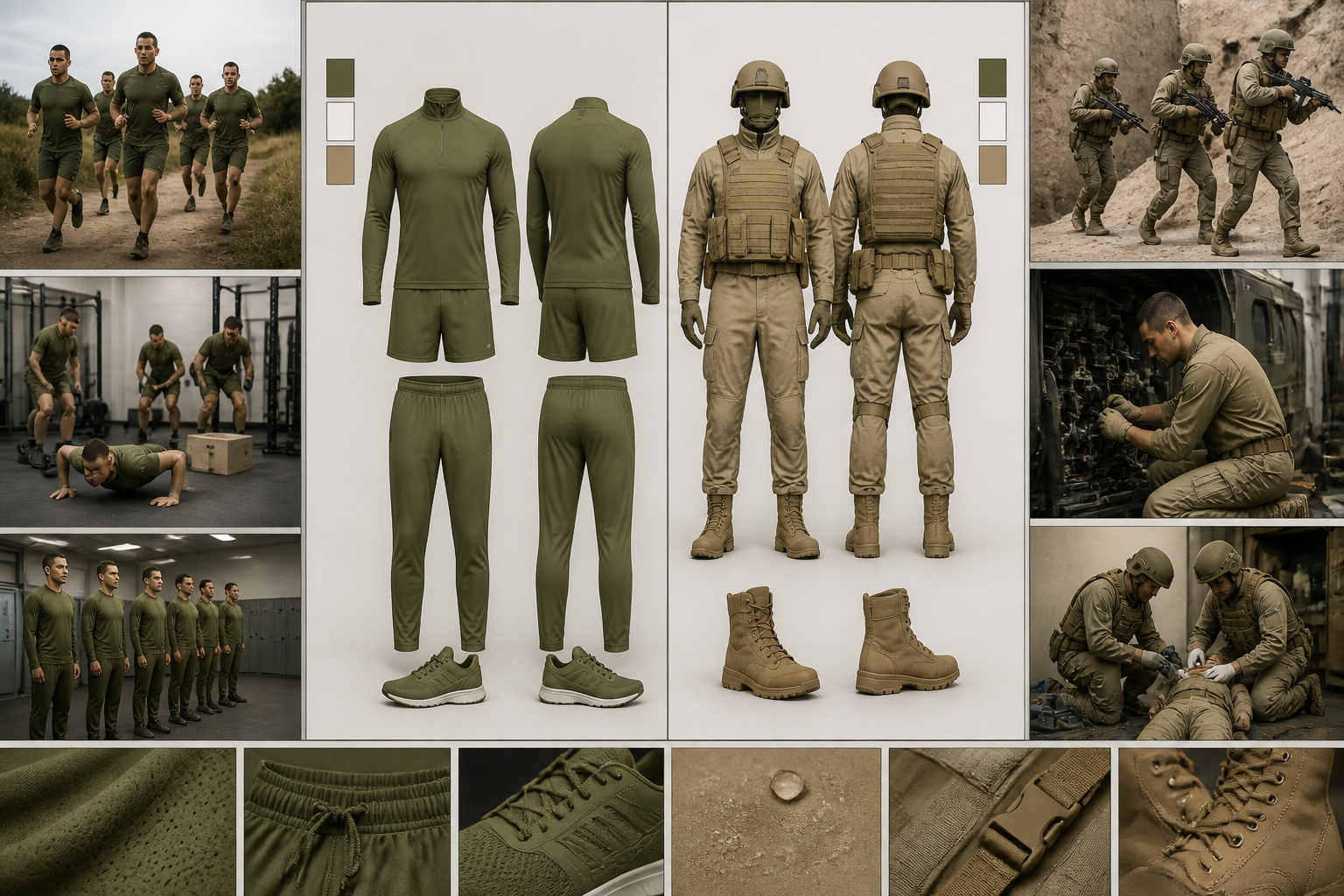
PT and protective dress comparison

Organized PT uses the prescribed PT dress for the relevant rank group, season, and unit direction rather than ordinary service dress. Approved team or contact sports may use a suitable team uniform, but mouth guards, head protection, and all mandated protective equipment must be worn. Water sports require equipment appropriate to immersion and the specific hazard, not merely the team’s clothing. The clothing decision follows the activity, climate, rank guidance, and risk controls together.

Activity-kit match

Function-first wardrobe

Protective Work and Formal Mess Functions

Protective work requires clothing and equipment that preserve movement, protection, and safe operation, even when those items sit over or replace a normal dress order. A mess or formal function instead requires the designated mess or formal order, with the correct accessories and ceremonial details for the event. Neither setting is an opportunity to mix attractive elements from different categories. Ask which function controls the situation, then verify that every visible and protective item supports that function.

Knowledge check 3

A unit schedules an approved contact-sport match immediately after organized PT. Which plan best meets the activity and safety requirements?

Readiness standards

Grooming Is Part of Readiness

Uniform compliance inspection case file

Hair must be neat, conservative, and compatible with military headgear and protective equipment; radical styles, unnatural colors, and visibly uncombed presentation are not permitted. Moustaches are controlled, permanent beards are generally prohibited except for Sikh personnel, and daily shaving is required in the duty-related contexts specified by the regulations. Fingernails, cosmetics, and fragrance must also remain within the prescribed limits for uniform. The inspection question is not whether a style is fashionable or individually acceptable, but whether it meets the service standard and works with the required equipment.

Inspection scenario: classify each observed grooming state

Visible details · context matters

The Visible Details Count

Jewelry, religious symbols, watches, eyewear, tattoos, mobile phones, headphones, bags, rain gear, and undergarments are governed by visibility, safety, and the type of uniform being worn. A permitted item may still need to remain concealed, minimized, or removed if it interferes with equipment or the prescribed appearance. Electronics and bags should not create an informal silhouette or impair attention and movement. Inspect each visible detail against the specific dress order rather than applying a vague rule that everything personal is forbidden or everything discreet is acceptable.

Inspector's call: permitted or not permitted?

Accommodation with operational precision

Accommodation, Safety, and Sikh Articles

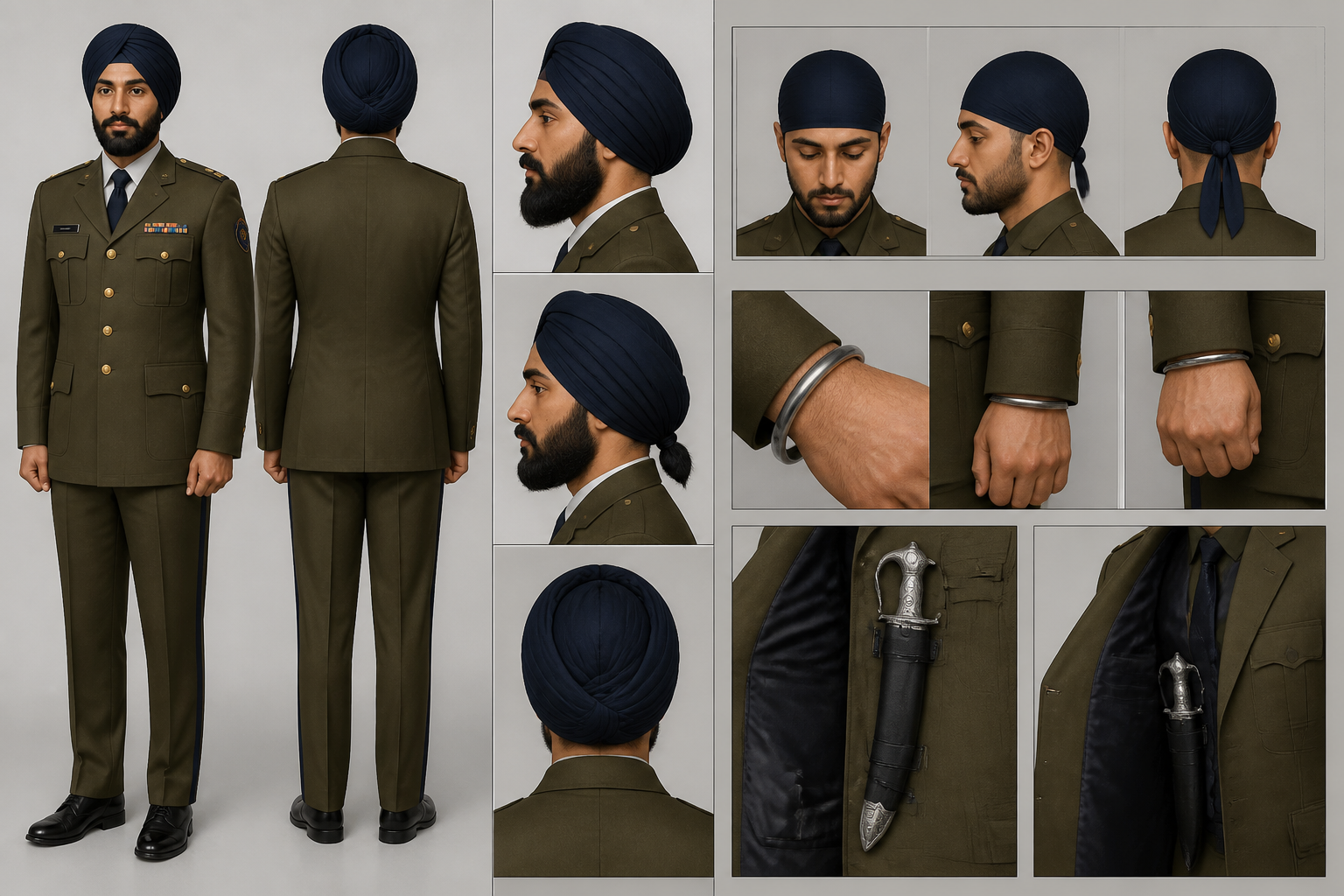
Authorized Sikh uniform accommodations

Sikh personnel may retain prescribed religious articles and grooming practices recognized by the regulations, but the accommodation is not a license to ignore a safety conflict. When a kara, hair, beard, turban, or other article affects protective equipment or operational performance, the unit should identify the exact risk and apply the authorized adjustment or alternative. The same reasoning protects both religious dignity and service readiness: accommodate wherever the rule allows, modify only for a real operational or safety need, and use competent authority when the case is not explicit. The chapter’s larger principle is consistent across all personnel: discipline is credible when it is precise, functional, and fairly applied.

Protective-helmet conflict

Final assessment · 1 of 5

Which sequence should an inspecting officer use when deciding what a member may wear?

Final assessment · 2 of 5

During inspection, a member has unnatural hair color, a handlebar moustache, visible headphones, and a concealed watch. Which finding requires corrective action?

Final assessment · 3 of 5

A water-sports session is added to a day that includes PT and a formal mess function. Which plan is most defensible?

Final assessment · 4 of 5

A female officer is 16 weeks pregnant and must attend duty normally requiring Dress No 3(a). What response best applies?

Final assessment · 5 of 5

A Sikh soldier’s standard religious grooming or article appears to interfere with a required protective helmet during a high-risk task. What should the unit do first?

Assessment result

Assessment complete